USTM is One of The Finest Universities of Northeast India: Former UGC Chairman
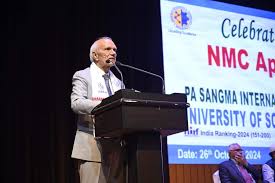
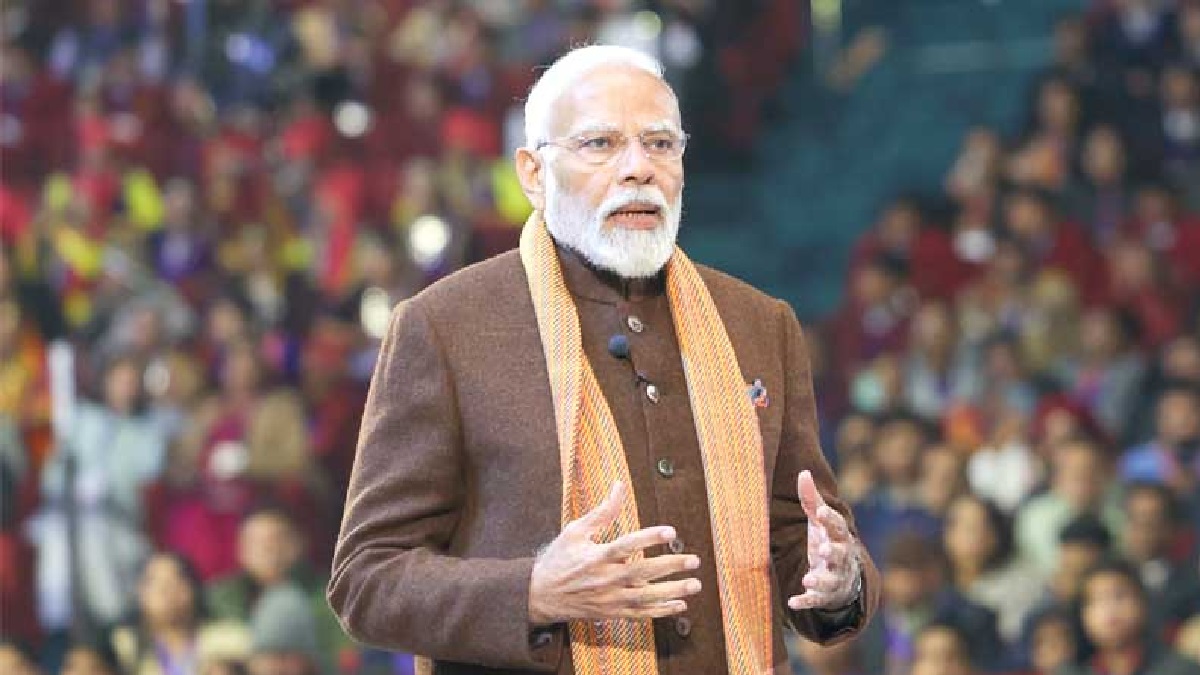
Professor Ved Prakash— Former Chairman of the University Grants Commissions a tall, lanky figure with a deep resonating voice and a knack for cutting through fluff with razor-sharp intellect, shared his views once in an interview with the University of Science and Technology Meghalaya in October 2024, highlighting the drawbacks of the higher education in the Indian system driving students to study abroad, and applauded the University of Science and Technology Meghalaya for its efforts in globalization.
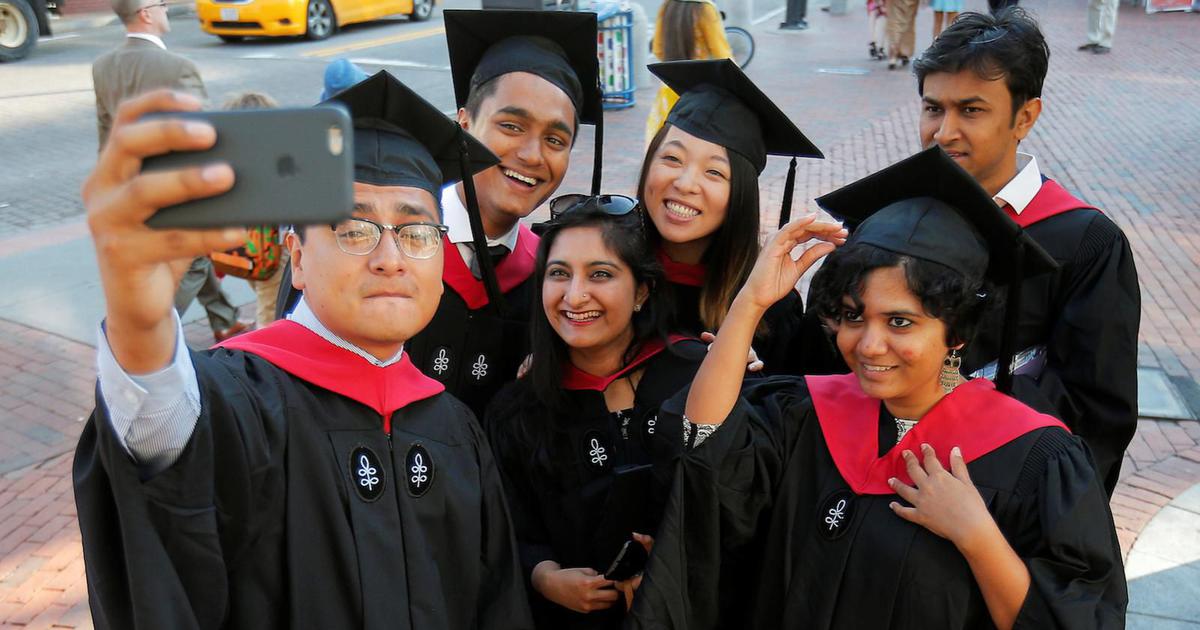
Why Students Are Going Abroad: When asked about what he particularly found dampening in the system, he said, “Now, would the student come to you if you are not going to give them the value of their time and value for their money? This is why a large number of children are going abroad.”
“If you see, I am claiming we have the largest system of higher education in terms of the number of institutions, but when I look at the international students, I find that 47,000 students from abroad are studying in our institutions, and these are from Bangladesh, Bhutan, Nepal, Sri Lanka and some from the Middle East. We have not been able to come up with proactive policies to attract international students, one of our shortcomings. So, our Indian higher education system is facing a lot of difficulties.
Not Enough Governmental Support: He explained how the government failed to give enough support: “The states have very weak resources because you have achieved a faulty revenue generation system in this country that most of the money goes to the Central Government; very little is left for the State Governments and States because of the paucity of resources, education is not their priority agenda. Education requires investment and investment requires money, money they don’t have, and that is the problem. This has happened after globalization, economic liberalization, and privatization, and with this, it is great that the world has opened up before you; you have umpteen opportunities before you, but in a poor country like ours with our limited resources and high population, it is a bigger challenge.
Need Quality Education: "What happens is you are not able to provide access to quality education, you lose out the talent. Look at Germany, and Australia vocational educational system, higher education quality takes precedence in all these countries, and a mediocre person cannot survive in higher education in the US or Great Britain, so this is the problem with us.”
Important to Have an Integrated Curriculum: He emphasized the importance integrationion in the curriculum and said: “I say you should have an integrated curriculum, photosynthesis is not only a biological process, it is a chemical process, it is a physical process, there is quantum physics involved in it. Everything involved, even geography in it. You can ask them to write a project on it.”
Vision of Globalization: He mentioned that the University of Science and Technology Meghalaya moves forward with a vision for globalization in 2030, and he is pleased with it. He hailed USTM as one of the finest universities in the Northeast.
Lauded USTM: He said, "In such a short span of time, the University of Science and Technology Meghalaya has graduated to a multidisciplinary university with science, engineering, literature, law, and a medical college as well, which is a very wonderful thing with a focus on a global scope. What I like is its inclusivity; you have children from everywhere. They have diversity. Beautiful campus, vastness, when you walk on the campus, your mind opens and you take breaths of fresh air, relishing the natural beauty around. It’s 14 years old and is not too big a time in the life of an educational institution, but within 14 years they have been defined as among the top 200 institutions in India in ranking by the Government of India – national institution ranking framework.”
He lauded Mahbubul Hoque, founder Chancellor of the University by saying, “Hoque gives 20% of education free, and 57% of the students are girls. The cost of the overall education is very low compared to the good quality, ranking among the 200 best universities.”
Bold in his demeanour and distinct in his style, everything about him defied convention, from the way he carried himself to the thoughts that shaped his worldview. He dissected ideas, questioned them, and, when necessary, dismantled them with logic.
India's Education After Independence: He went on to describe India's educational landscape after Independence: "When we started after Independence, we had only 20 or so universities and 500 colleges in this country. Today, we have more than 1,100 university degree-awarding institutions. I call them because we have institutions of national importance in that category, and we have different kinds of institutions that are interested in the responsibility of awarding degrees, and that number is close to 1,113. Apart from that, we also have 50,000 colleges with undergraduate and post-graduate programs, so of the 88,000 higher educational institutions that we have in the world, we have the largest number of higher educational systems in terms of the number of institutions, close to 56,000 institutions. We have in these different categories we have talked about.
“For about five decades after Independence, we were imparting higher education through public institutions and grant institutions, and these institutions were not for profit.
“Making money was not the motivation for that and we were providing higher education at these institutions at an affordable cost, but after the 1990s, when we entered into the era of globalization, economic liberalization and privatization, what happened is that the cost of higher education in particular and also that of the school education has increased in leaps and bounds and the reason for that is that the government is steadily withdrew support from education. They are still supporting some institutions, but that number is very small.
“For instance, of all the universities, we only have 56 central universities whereas the number of private universities has gone more than 400 and these private institutions are not getting financial assistance even for the promotion of research from the government due to which they have very little options but to increase the internal recoveries of their institutions, so they have increased the tuition fees, they have also charging studies in other variety of ways such as developmental charges, so education in general and particularly higher education has become an expensive affair now. This is a problem.
“Higher education is facing other problems, such as the leading universities of the world coming up with high-opportunity programs. They are shifting from conventional teaching and learning to interdisciplinary teaching and learning, which means bringing about structural changes and programmatic changes in existing curricula provisions. Where we had created the structures of disciplines in the name of physics, chemistry, biology, geology, botany, history, and geography during the late 18th and early 19th centuries, now the universities are coming up with programs wherein they are dissolving the boundaries between the disciplines because the new knowledge lies at the intersections of different disciplines.
Importance of Grafting Subjects Together: Highlighting the urgency of grafting vast domains of knowledge together for a holistic outcome, he said,“I will give you this specific example. For instance, if you have the problem of water management, then the problem of water management cannot be addressed only through civil engineering. It involves psychology, it involves philosophy, it involves geography of that area, it also involves science and technology, it involves all domains of knowledge which is why now, the world is gradually realizing that to meet all the challenges of the world’s real complex problems, we will have to dissolve the boundaries between the disciplines, which means that institutions will have to switch over to interdisciplinary teaching and learning. That would require a different kind of orientation of the teachers, which would require bringing teachers from physics with chemistry and chemistry with geology, and geology with botany and botany with philosophy and philosophy with history.
Now, this is not easy because each discipline has its own terminology, each discipline has its own philosophy and when you are merging the philosophies, you have to have that kind of mindset and you have to have that kind of capacity-building arrangement in your institution. Now, the leading universities are doing that, it requires resources and since our institutions are already starving of resources, they are not able to embrace these changes.
“Similarly, by and large, universities are engaged in India with disciplinary research; one would do research in biology, another in physics, and another in chemistry. We have not even transitioned from firm-disciplinary research to multidisciplinary research. Multidisciplinary research means you have one problem, which is a common problem, but people from different disciplines are attacking that problem. Pharmacy people are working on AIDS, chemistry people are working to find a vaccine for AIDS and vaccines for other kinds of diseases, so now universities are switching over to interdisciplinary research, which also requires resources, that also requires bringing people from different domains of knowledge together, so that is also not available with us, unfortunately.
“If you look at the history of the Nobel Laureates in the past two decades, you would find that a large number of Nobel Laureates are those who have defied a single discipline. You can get senses from different quarters, that is another thing.
Skill in Education is Vital: “Another thing which is increasing the cost of higher education is the skill in gaps. Because of the impact of the 4th Industrial Revolution, what is happening is that you are not getting the people with the skills which are needed by the modern world for which you need different kinds of programs, for instance, if you have acquired certain computer skills today, you are working, you have passed out from the institution, you have entered into the world of work, but all of a sudden you are asked to transit from those ordinary computer skills to artificial intelligence, machine learning to deep learning and virtual reality and you do not have those kinds of skills, and you have to survive, so you would like to go back to the university to upskill yourself. Reskilling is one, and upskilling is another one. You already have certain skills, but you want to reskill yourself to a higher level.
Flexible Pathways Needed: Speaking on how universities need to be flexible, he said, “So universities of the modern world are coming up with these kinds of tailor-made skilling programs for traditional students and non-traditional students. You become non-traditional when you wish to come back from your profession to the university; you become a non-traditional student, so universities have to come up with those types of programs.
“Another challenge that is coming up is about the flexible learning pathways. Now, who is going to come to higher education in large numbers, people who have not accessed education thus far. In families like yours and families like ours, we have already universalized higher education. Everyone had access to higher education, but the swelling middle-class population or the lower middle-class population which has an aspiration to have a degree from a university, they would like to come, and when they come to you, if you continue to offer programs with the rigid structural framework, they may not find it easy, they would like that you “have a program through which you could provide multiple entries and multiple exits. They not only require multiple entry and multiple exit options, but they also require the freedom to study and how to study.
“Whether they would like to study through a main program, a high-grade mode, or they would like to study through a face-to-face mode of education, they would like that freedom. They would also like to know when to study and where to study. International institutions are providing those kinds of opportunities, and you will see there are 11 flexible learning pathways at the international level. Your institutions do not have those kinds of provisions, and they have not started thinking about it either. So, these are some of the challenges that are making the cost of higher education more and more expensive, and the institutions are finding it difficult to survive.
Professor Ved Prakash was born at Baoli Village of District Meerut in Uttar Pradesh, India on April 4, 1952 from a farming family. Backed by his parents, he overpowered the lack that he faced during his primary schooling. Good fortune raised an inspirational teacher friend of his father who helped him.
Subsequently, he earned his first Master’s degree in Chemistry from Janta Vedic Post Graduate College, Baraut. He, while learning Chemistry, discovered the magic of English literature.
He would lean in with an air of quiet confidence, his eyes alight with the thrill of debate, and say, "Give me thirty minutes—just half an hour—and through reason alone, I will prove to you that ....." His words were not a boast but a challenge, an invitation into the depths of his reasoning, where faith was merely an illusion waiting to be dispelled.
It goes to the singular credit of Prof. Ved Prakash for succeeding in convincing the government of India to elevate the status of NIEPA to a National University of Educational Planning and Administration (NUEPA) in a record time of eleven months. He served as Founder Vice-Chancellor of this university, wherein he introduced many reforms, including several research programs from the year 2007-2008.
As a protean universal thinker and researcher, Prof. Ved Prakash has substantially published his thoughts on multiple domains of education. He has authored over a hundred publications, which include books, edited volumes, monographs, teachers’ handbooks, professional research papers and articles in national and international journals and research reports.

You Might Also Like